Space for Lament
We don’t have to have it all together in front of God.

This is part of a series, sharing the self-authored book, “The Hard Way: Honest Conversations about mental health in our homes, churches and communities,” which is introduced in this free post as well as this one. The funds given by paid subscribers for this post will be donated to the Open Path Collective
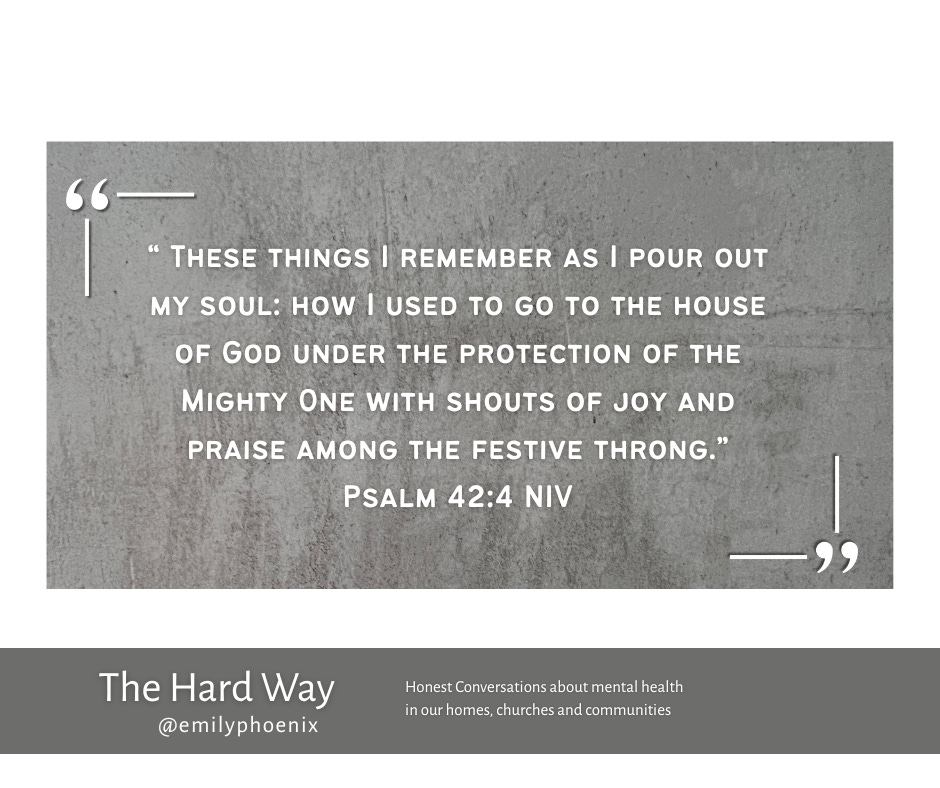
1 As the deer pants for streams of water, so my soul pants for you, my God. 2 My soul thirsts for God, for the living God. When can I go and meet with God? 3 My tears have been my food day and night, while people say to me all day long, “Where is your God?” 4 These things I remember as I pour out my soul: how I used to go to the house of God under the protection of the Mighty One with shouts of joy and praise among the festive throng.
5 Why, my soul, are you downcast? Why so disturbed within me? Put your hope in God, for I will yet praise him, my Savior and my God. 6 My soul is downcast within me; therefore I will remember you from the land of the Jordan, the heights of Hermon—from Mount Mizar. 7 Deep calls to deep in the roar of your waterfalls; all your waves and breakers have swept over me. 8 By day the Lord directs his love, at night his song is with me—a prayer to the God of my life.
9 I say to God my Rock, “Why have you forgotten me? Why must I go about mourning,oppressed by the enemy?” 10 My bones suffer mortal agony as my foes taunt me, saying to me all day long, “Where is your God?” 11 Why, my soul, are you downcast?Why so disturbed within me? Put your hope in God, for I will yet praise him, my Savior and my God. -Psalm 42 (NIV)
In the Psalms, David does a masterful job of sharing his authentic self—his fears, doubts, and praise for God. I’ve realized that Psalm 42 offers a realistic description of the isolation that comes with serving the LORD—striving to be put together—and yet still grasping for life to make sense in the midst of hardship. David was pursued by his best friend’s father—King Saul. There were few safe places of refuge for him.
Even Jesus withdrew to lonely places to talk to God.
We need places of refuge during our struggles.
Are we fearful like David that maybe those places don’t exist?
And what will people think if we escape to a place of rest?
Why are we scared to be alone with our own thoughts?
In the middle of depression, there is no room or energy for anything outside of ourselves. Somehow the tears sustain us like the milk a child needs to survive. We’re not thriving—just surviving. It’s hard to decipher what our friends and family are saying from the voices in our minds causing us to doubt our value.
We struggle to see God in all of this.
At times, even the church is no longer a place of refuge.
Why isn’t this a safe space? Our house of worship has become a place where we have to talk to people, share our feelings and keep up the facade that all is well, even when we aren’t. The church isn’t always the safest place for someone suffering from mental illness.
Keep reading with a 7-day free trial
Subscribe to Emily’s Substack to keep reading this post and get 7 days of free access to the full post archives.